

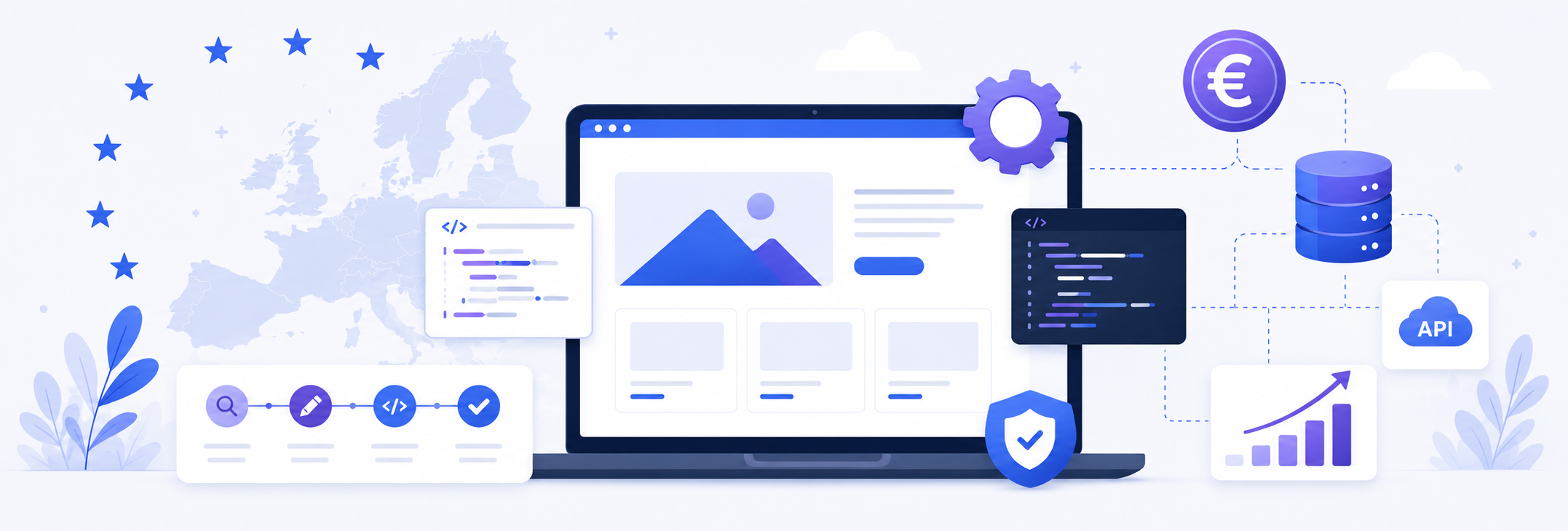
Websites have become operational assets. They generate leads, automate processes, support customer journeys, integrate with business systems, and often serve as the first impression of an entire company.
That's why demand for Web Development Services in Europe continues to grow across industries.
Businesses are investing in websites that do more than look attractive. They want platforms that perform, scale, convert visitors, and support long-term business objectives.
What Web Development Services Actually Include
Modern web development combines strategy, user experience, technology, performance optimization, security, and business functionality.
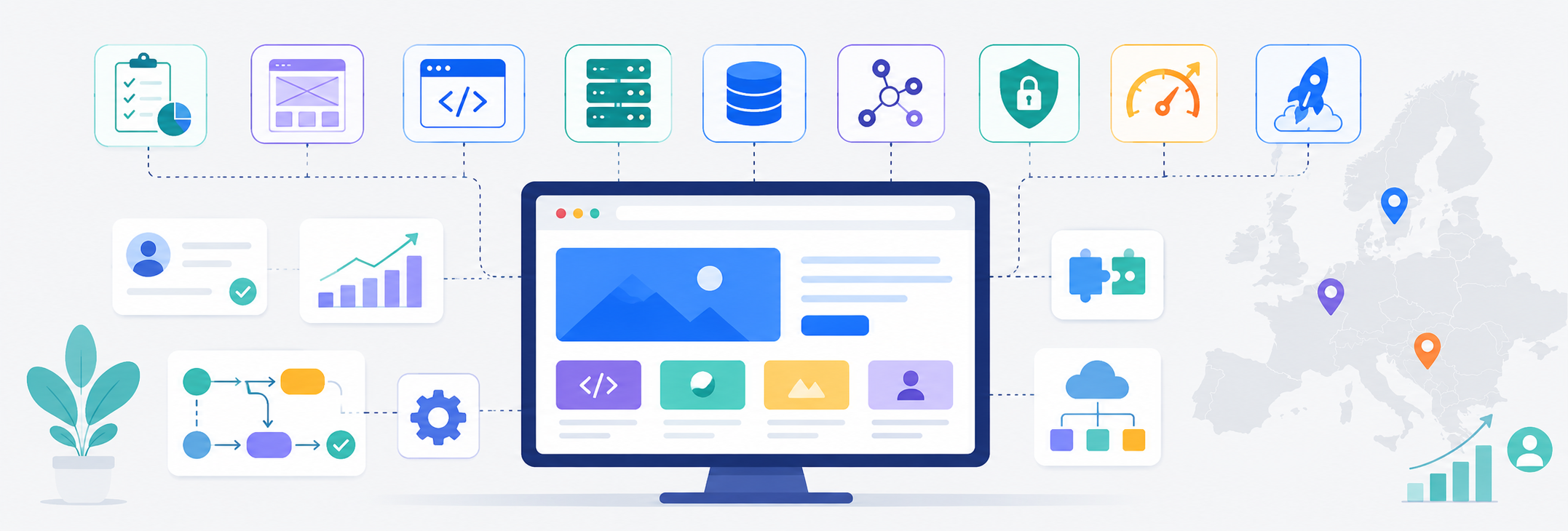
A professional web development project typically includes:
- Business requirement analysis
- User experience planning
- Frontend development
- Backend development
- Database architecture
- API integrations
- Security implementation
- Performance optimization
- Testing and deployment
A website is no longer just a marketing asset. It's often part of the business infrastructure itself. Organizations looking for scalable digital solutions often invest in specialized web development services designed around performance, scalability, and long-term growth.
Why Businesses Across Europe Continue Investing in Web Development
Users expect websites to be fast, secure, intuitive, and accessible across devices. If a website feels outdated, visitors often make assumptions about the business behind it.
Digital-First Customer Behavior
Most customer journeys now begin online.
Potential buyers research products, compare services, read reviews, and evaluate businesses before making contact. A strong website supports that decision-making process.
Operational Efficiency
Modern websites often automate tasks that previously required manual effort.
- Lead generation
- Appointment scheduling
- Customer support
- Order management
- Document sharing
- Account management
The right website can reduce workload while improving customer experience.
The Typical Web Development Process
Successful websites rarely happen by accident.
Behind every effective platform is a structured development process.
1. Discovery and Planning
This phase focuses on understanding:
- Business objectives
- Target audience
- User requirements
- Technical needs
- Competitive landscape
Skipping this stage often leads to expensive revisions later.
2. Wireframing and UX Design
Before development begins, teams map out:
- User journeys
- Page structures
- Navigation systems
- Content hierarchy
Good user experience feels simple because significant planning happened beforehand.
3. Frontend Development
This is the visual layer users interact with directly.
Developers build:
- Responsive layouts
- User interfaces
- Interactive features
- Mobile experiences
4. Backend Development
The backend handles business logic and system functionality.
- Databases
- User management
- Integrations
- Authentication systems
- Administrative controls
5. Testing and Launch
Before going live, websites undergo extensive testing for:
- Performance
- Security
- Compatibility
- Usability
- Functionality
The launch is important, but preparation determines success.
What Impacts Web Development Costs?
There is no universal website price.
The cost depends on what the website needs to accomplish.
Project Complexity
A simple informational website requires less effort than a custom business platform with advanced functionality.
Custom Features
Examples include:
- Customer portals
- Booking systems
- Ecommerce functionality
- Membership platforms
- Real-time dashboards
- Custom integrations
Design Requirements
Fully custom user interfaces generally require more time and expertise.
Third-Party Integrations
Connecting websites with CRMs, payment gateways, inventory systems, or ERP platforms increases development effort.
Security and Compliance
Industries handling sensitive information often require advanced security implementations and compliance measures.
Cost is largely determined by business requirements, not simply the number of pages.
Business Benefits of Professional Web Development
The strongest websites generate value long after launch.
1. Improved Customer Experience
Fast, intuitive websites create smoother interactions and increase customer satisfaction.
2. Higher Conversion Rates
Good development improves usability, reducing friction during customer journeys.
3. Scalability
As businesses grow, their websites should be capable of growing with them rather than requiring a complete rebuild every few years.
4. Better Integration Capabilities
Modern websites often connect with:
- CRM systems
- Marketing automation platforms
- Analytics tools
- Payment gateways
- Inventory software
Many businesses combine web platforms with broader web development business solutions to create connected digital ecosystems.
5. Stronger Brand Credibility
Visitors often form opinions about a business within seconds. A professional website helps establish trust quickly.
Common Web Development Mistakes Businesses Make
1. Prioritizing Design Over Functionality
Beautiful websites that frustrate users rarely perform well.
2. Ignoring Mobile Users
Mobile traffic continues to dominate across most industries.
Mobile optimization is no longer optional.
3. Choosing Short-Term Solutions
Quick fixes often create technical debt that becomes expensive later.
4. Neglecting Website Security
Security vulnerabilities can damage both operations and reputation.
5. Failing to Plan for Growth
Scalability should be considered during development, not after traffic increases. Most website problems begin with planning mistakes, not technical mistakes.
Why Custom Development Is Becoming More Popular
As business requirements become more complex, organizations often need greater flexibility.
Custom development allows organizations to:
- Build unique functionality
- Improve operational efficiency
- Integrate internal systems
- Support future growth
- Differentiate customer experiences
Businesses evaluating custom development approaches can also explore insights on web development services and business growth to better understand long-term value.
Final Thoughts
Web Development Services in Europe continue to grow in importance because businesses increasingly depend on digital experiences to compete, scale, and serve customers effectively.
The organizations investing in modern, scalable web platforms today will be better positioned to adapt to tomorrow's opportunities.
The ones relying on outdated websites often discover too late that digital infrastructure is no longer optional.
If you're planning a new website or upgrading an existing platform, you can start here: Contact our team.